Professional roof moss removal and cleaning across Oxford using soft wash and biocide — never high-pressure washing, which damages tiles. Specialists in Oxford's humid riverside and canal-side properties.
Quick answer: Roof moss removal in Oxford costs £400–£800 for a semi and £600–£1,200 for a detached, using soft wash and biocide treatment. We never pressure wash tiled roofs — it strips the protective surface and accelerates regrowth. Treatment inhibits moss for 3–5 years depending on location.
✓ NFRC Registered
✓ Fully Insured
✓ 10-Year Guarantee
✓ Free Quotes
✓ No Hidden Costs
Our Method
Why We Never Pressure Wash Tiled Roofs
High-pressure washing is widely marketed but damages tiled roofs. On concrete tiles it strips the protective aggregate surface, increases porosity, and creates a rougher surface that accelerates future moss growth — the opposite of the intended result. We use low-pressure soft wash and manual scraping followed by a penetrating biocide. On clay tiles and Welsh slate we use chemical treatment without mechanical cleaning, protecting the surface integrity.
This is a genuine differentiator: any contractor offering to jet-wash your Oxford roof at high pressure is risking long-term damage for a short-term appearance. Soft wash plus biocide is the correct, roof-safe method.
Oxford Humidity Map
Why Oxford Roofs Grow Moss So Fast
Riverside and Floodplain Properties
Oxford's position in the upper Thames valley gives it exceptional ambient humidity. Wallingford, on the Thames floodplain, has the fastest moss growth rates in the district — north-facing slopes within 400m of the river develop dense coverage within 18 months of cleaning. Iffley, at the Thames and Cherwell confluence, sees growth two to three times faster than elevated Oxford properties. Wolvercote, beside Port Meadow, and riverside Abingdon are similarly affected.
Canal-Side and Wooded Roads
The Oxford Canal creates a moisture corridor through Jericho and along the east side of Kidlington — canal-side streets accumulate moss faster than higher ground nearby. North-facing slopes under the dense tree canopy of North Oxford and Summertown stay damp longest after rain, favouring moss, lichen and algae.
Elevated Oxford: Slower Growth
Headington, Barton and Risinghurst, at 80–100m on the eastern hills, have the best drying conditions and the lowest moss rates in Oxford — closer to the national average. These properties can extend their biocide cycle to 5 years, where riverside properties need treatment every 3 years.
What Moss Does to Oxford Roofs
Accumulated moss holds moisture against tiles and works between laps, creating water pathways. On concrete tile it accelerates nail corrosion — a contributing factor to nail sickness on Oxford's post-war estates. Treating moss before it establishes is cheaper and more effective than removing heavy established growth.
Oxford Prices
Moss Removal & Roof Cleaning Cost
Biocide treatment only (3-bed semi)£200–£350
Soft wash + biocide (2-bed terrace)£400–£600
Soft wash + biocide (3-bed semi)£400–£800
Full clean + biocide (4-bed detached)£600–£1,200
Gutter clear add-on£80–£150
All roof cleaning uses soft wash and biocide — never high-pressure washing on tiled roofs. Riverside and canal-side Oxford properties benefit from a 3-year treatment cycle; elevated properties can extend to 5 years. Gutter clearing is a recommended add-on to clear debris displaced by cleaning.
The Long-Term Approach to Oxford Moss
Prevention Beats Repeated Cleaning
Roof moss in Oxford is not a one-off problem to be blasted away; it is a recurring condition driven by the city's humidity that needs managing over time. This is why our approach centres on treatment cycles rather than one-off cleans. A soft wash removes the existing growth, but without a follow-up biocide the moss returns within a couple of seasons in Oxford's damp valley climate. The biocide is what does the lasting work, penetrating the surface and inhibiting regrowth for three to five years depending on how exposed the property is. Getting the cycle right for your specific location is the difference between a roof that stays clean and one that greens over again within eighteen months. The location-specific cycle matters more in Oxford than in most places because the humidity varies so sharply across the city. A riverside Wallingford or Iffley property, or a canal-side Jericho terrace, sits in the highest-humidity band and benefits from a three-year cycle. A north-facing slope under the tree canopy of Summertown or North Oxford holds moisture longest after rain and needs similar attention. An elevated, well-drained property in Headington or Risinghurst can comfortably extend to five years. We assess your property's aspect, tree cover and proximity to water at the survey and recommend a realistic cycle rather than selling an unnecessary annual clean. The reason we never high-pressure wash tiled roofs deserves repeating, because it is the most common mistake in the trade. Pressure washing strips the protective surface layer from concrete tiles, opening the pores and roughening the surface — which actually accelerates future moss growth and shortens tile life. It can also drive water under the laps and damage the bedding. A jet-wash gives an impressive immediate result and a worse long-term outcome. Soft washing and manual scraping, followed by biocide, protects the tile while achieving a lasting clean. Any Oxford contractor offering to pressure-wash your roof is prioritising the short-term look over the roof's health.
Roof cleaning and moss treatment involve working at height and handling biocides, both governed by HSE guidance requiring safe access and correct chemical handling rather than ad-hoc pressure washing.— Source: HSE Work at Height Regulations 2005
Moss taking over your Oxford roof? Book a free survey and soft wash quote.
"Our Wallingford roof was green with moss from the river damp. Soft washed and treated it properly — explained why pressure washing would have damaged the tiles. Looks new."
Margaret D. · Wallingford
★★★★★
"Iffley house near the lock, moss every year. They treated it and it's stayed clear far longer than the jet-wash guy we used before. Proper job."
Colin H. · Iffley
★★★★★
"North-facing slope under the trees was thick with moss. Scraped and biocided, gutters cleared too. Honest about the 3-year cycle for our spot."
Fiona G. · Summertown
Common Questions
Frequently Asked Questions
Moss removal in Oxford costs £400–£800 for a semi and £600–£1,200 for a detached, using soft wash and biocide. Biocide treatment alone is £200–£350. Gutter clearing can be added for £80–£150.
No. We never high-pressure wash tiled roofs. Pressure washing strips the protective surface from concrete tiles, increases porosity and accelerates future moss growth. We use low-pressure soft wash and biocide, which is the correct roof-safe method.
Oxford's Thames and Cherwell floodplain humidity, the Oxford Canal and dense tree canopy create high ambient moisture. Riverside properties in Wallingford, Iffley and Wolvercote grow moss two to three times faster than elevated properties in Headington or Risinghurst.
In typical Oxford conditions, 3–5 years. Riverside and canal-side properties in Wallingford, Iffley, Wolvercote and Jericho benefit from a 3-year cycle. Elevated properties in Headington or Risinghurst can extend to 5 years.
Yes. Accumulated moss holds moisture against tiles and works between laps, creating water pathways. On concrete tile it accelerates nail corrosion, contributing to nail sickness. Treating moss early is cheaper than removing heavy established growth.
Biocide is most effective applied in spring before the summer growing season, but treatment can be carried out year round. Cleaning is less effective in cold conditions as the chemical action slows. We advise the best timing at the survey.
Gutter clearing is a recommended add-on at £80–£150. Cleaning a roof displaces moss and debris into the gutters, so clearing them at the same visit prevents immediate blockage. We always water-test after clearing.
A green, moss-covered roof is more than cosmetic in Oxford's humid valley climate — accumulated moss holds moisture against the tiles and works into the laps. But the method matters more than the moss.
Visible moss, lichen or algae across the roof slope, especially north-facing
Moss debris collecting in the gutters and at the eaves
A roof that looks permanently damp or discoloured
Growth returning within a year of a previous jet-wash
When it is not the answer: If a roof is only lightly colonised, a biocide treatment alone is enough — you do not need a full mechanical clean, and you should never let anyone high-pressure wash a tiled roof. Read the full guide.
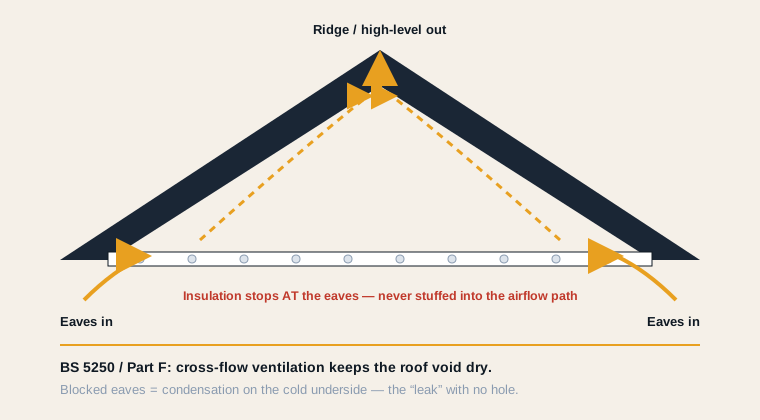
Roof ventilation — blocked airflow causes the condensation often mistaken for a leak.The process
How a Oxford Moss Removal Job Runs
1. Survey
We assess the moss coverage, tile type and your property's humidity exposure to recommend a realistic treatment cycle.
2. Written quote
A fixed-price quote for soft wash and biocide — never high-pressure washing on tiled roofs.
3. Soft wash & scrape
We remove growth by low-pressure soft wash and manual scraping, protecting the tile surface.
4. Biocide treatment
We apply a penetrating biocide that inhibits regrowth for 3–5 years depending on location.
5. Gutter clear & sign-off
We clear displaced debris from the gutters and water-test before finishing.
Timescales
How Long Does It Take?
Job
Typical duration
Biocide treatment only (semi)
2–3 hours
Soft wash + biocide (semi)
Half a day to 1 day
Full clean + biocide (detached)
1–2 days
Gutter clear add-on
1–2 hours
Biocide works best applied in dry conditions and is most effective before the spring growing season; heavy rain within hours of application reduces its effect.
Access
Scaffold, Skips & Street Access
Roof cleaning is generally done from towers, ladders or a cherry picker; scaffold is rarely needed unless the roof is steep or very high. Scaffold is specified for: steep or high roofs where safe standing access is required for manual scraping - always itemised in your written quote, never a hidden extra, and we arrange it.
Central Oxford's medieval street core and the tight Victorian terraces of Jericho and off the Cowley Road mean rear-access scaffold and permit-controlled pavement space are the norm on many jobs. Pavement scaffold and skip permits go through Oxford City Council; allow a few working days on streets like Holywell Street, Ship Street, St Michael's Street, Merton Street where space is tight.
Pricing
Oxford Moss Removal: Cost Guide
Job
Typical range
Notes
Biocide treatment only (semi)
£180–£350
Soft-applied, no pressure
Soft wash + biocide (semi)
£350–£650
Scrape & treat
Full clean + biocide (detached)
£600–£1,200
Larger roof area
Gutter clear add-on
£60–£140
Clears displaced debris
Repeat 3-year cycle
from £180
Maintenance treatment
What moves the price
Roof area and pitch
Extent of moss and lichen colonisation
North-facing and riverside humidity exposure
Access method: tower, ladder or cherry picker
Worked example: A soft wash and biocide treatment on a moss-heavy north-facing semi near the Cherwell in Marston typically runs around £480.
No deposit on roof cleaning. Payment on completion. VAT included in the written quote. Never high-pressure washing on tiled roofs.
Covering OX1, OX2, OX3, OX4 and surrounding postcodes.
Guarantee
Your Guarantee, Explained
We guarantee the workmanship of the clean; the biocide's regrowth-inhibiting effect is expected to last 3–5 years depending on your property's exposure.
Covered: workmanship for 10 years, in writing, transferable if you sell.
On top: manufacturer warranties on materials (terms vary by product).
Not covered: storm or impact damage - that is an insurance matter, and we will document it for your claim.
If a fault appears in covered work, we come back and put it right. No quibbling, no re-charge.
Good to know
Disruption, Mess & Weather
An external job with some runoff of moss debris — we protect planting near the eaves and clear the gutters and ground before leaving. You do not need to stay home for external work - we just need power and access agreed in advance.
Cleaning runs spring to autumn ideally; Oxford's riverside and canal-side humidity means north-facing slopes regrow fastest and benefit from a 3-year cycle. The Thames and Cherwell valley setting keeps ambient humidity high, so drying times for mortar, GRP and biocide run longer here than on the surrounding higher ground.
Get Your Free Oxford Moss Removal Quote
Free survey, written quote, no call-out fee. Covering Oxford and all of Oxfordshire.