Rapid storm damage response across Oxford: temporary make-safe, full damage assessment and insurance claim support. Written reports and photographs for your insurer. 2-4 hour response.
Quick answer: For storm damage in Oxford, we provide rapid make-safe within 2–4 hours, a written damage report with photographs for your insurer, and full repair. Most storm claims cover displaced tiles, lifted ridges and lead damage. We support the whole insurance claim journey from assessment to repair.
✓ NFRC Registered
✓ Fully Insured
✓ 10-Year Guarantee
✓ Free Quotes
✓ No Hidden Costs
The Process
Storm Damage: The First 24 Hours
When storm damage hits your Oxford roof, the priority is making it safe and watertight, then documenting the damage for your insurer. We attend within 2–4 hours to apply temporary weatherproofing and secure displaced tiles or ridge sections. We then photograph the damage thoroughly and provide a written report your insurer will accept. Only once the claim is agreed do we carry out the permanent repair — though we can proceed on an emergency basis where the property is at risk.
This is distinct from a general emergency call-out: storm work involves the insurance claim journey, which needs proper documentation from the outset to avoid disputes over cause and cost.
Oxford Storm Exposure
Storm Damage Patterns in Oxford
Atlantic Storms up the Thames Valley
Atlantic weather systems track up the Thames Valley with enough regularity that storm damage is a recurring event across Oxford. The peak periods are October–November and January–February. Elevated properties — Barton, Risinghurst, the Headington ridge, Wantage facing the Downs, and the exposed Didcot plain — take higher wind loading than sheltered valley properties and see the most storm displacement.
Nail Sickness Amplifies Storm Damage
On Oxford's post-war estates, nail sickness turns a routine storm into a damage event. A 40mph gust that causes no movement on a sound-fixed roof displaces multiple tiles on a Blackbird Leys, Barton or Risinghurst property where the ferrous fixings have corroded. Storm call-outs from these estates spike after every significant blow.
Botley and the Westerly Exposure
Botley, facing the Thames floodplain to the west with no shelter, takes the full force of prevailing Atlantic systems. West-facing slopes and gutters here suffer the most wind damage of any Oxford suburb. We attend Botley storm calls as a priority given the exposure.
Period Property Vulnerabilities
Oxford's Victorian and Edwardian properties have specific storm weaknesses: aged lead flashings that lift, loose ridge tiles on 85–90 year old mortar beds, and slates on corroded nails. High winds find these weak points first. We assess and document all of them for the insurance claim.
Storm Response
Storm Damage Costs & Insurance
Emergency make-safe call-outfrom £180
Temporary weatherproofingIncluded in call-out
Written insurance damage reportfrom £120
Displaced tile repair£150–£450
Ridge re-bed after storm£150–£650
Full repairPer assessment / claim
Many storm repairs are covered by buildings insurance. We provide the written report and photographs your insurer requires and can liaise on the claim. Where the excess exceeds the repair cost, we advise honestly on whether claiming is worthwhile. Emergency make-safe is available 24/7.
Handling an Oxford Storm Claim
Getting Your Insurance Claim Right
A storm damage insurance claim succeeds or fails on documentation, and the time to get it right is immediately after the damage, not weeks later. Insurers apply the ABI storm definition, which generally requires evidence of severe weather — wind speeds around fifty-five miles per hour or more — at the time the damage occurred. They will also want to see that the damage was caused by the storm rather than by pre-existing wear or lack of maintenance, which is a common reason claims are reduced or refused. This is why our first storm visit does two things: makes the roof safe, and documents the damage thoroughly with photographs and a written report that establishes the cause. Getting this evidence at the outset is what protects the claim. The sequence matters. When storm damage hits an Oxford roof, we attend within two to four hours to apply temporary weatherproofing and secure any displaced tiles or ridge sections that pose a risk — this is the make-safe, and it stops further water damage while the claim proceeds. We then provide the written damage report and photographs in the format insurers expect, which you submit with your claim. Only once the claim is agreed do we carry out the permanent repair, though where the property is at serious risk we can proceed on an emergency basis and document in parallel. Keeping make-safe and permanent repair as distinct stages is what keeps the claim clean. Not every storm claim is worth making, and we will tell you when it is not. If the likely repair cost is close to or below your policy excess, claiming may cost you more in excess and future premium loading than simply paying for the repair. Because we give you an honest repair cost at the assessment, you can make that decision with the numbers in front of you rather than committing to a claim blind. Oxford's exposed estates — Barton, Risinghurst, Botley and the Didcot plain — see repeated storm damage, and for these properties we can also advise on whether the underlying vulnerability, usually nail sickness, is worth addressing to prevent the damage recurring every winter.
Buildings insurers apply the ABI storm definition, which generally requires wind speeds of around 55mph or more (Gale Force 10) for a valid storm damage claim, so documenting the weather event matters.— Source: ABI storm damage guidance
After the Storm: Preventing the Next One
Turning a Repair into Resilience
A storm repair fixes the immediate damage, but the most useful thing we can do for an Oxford homeowner who has just been hit is to explain why it happened and whether it will happen again. Storm damage is rarely random; it exploits an existing weakness. A roof that loses tiles in a moderate gale usually had corroded fixings, loose mortar or aged lead that a sound roof would not. Understanding this turns a reactive repair into a chance to prevent the next call-out. When we assess storm damage, we note not just what failed but why, and flag the underlying condition so you can decide whether to address it. On Oxford's exposed estates, this is a recurring conversation. The 1960s and 1970s concrete-tile roofs of Barton, Risinghurst and Blackbird Leys shed tiles in storms because nail sickness has left the fixings unable to hold them. Repairing the displaced tiles restores the roof, but the same wind will find the next weak fixing next winter. For these properties, we explain the choice honestly: keep paying for storm repairs each year, or address the underlying nail sickness with a re-tile using stainless fixings and mechanical dry verge that will not fail again. Neither is wrong; it depends on the roof's overall condition and how long you plan to stay. For period properties, the resilience conversation is about lead and mortar. Aged Victorian lead flashings lift in high wind because they have hardened and lost their grip; ridge tiles come loose because their eighty-year-old mortar bed has failed. Re-dressing the lead and re-bedding the ridge as part of the storm repair, rather than just refixing what moved, removes the weakness that let the storm in. We document all of this for your insurer where it forms part of the claim, and give you a clear picture of your roof's storm resilience so that the repair we carry out today reduces the chance of an emergency call tomorrow.
Storm damage to your Oxford roof? Call now for rapid make-safe and claim support.
"Half our ridge came off in the January storms. On site within two hours, made it safe, and the written report went straight to our insurer. Claim paid, roof fixed."
Graham W. · Risinghurst
★★★★★
"Tiles everywhere after the wind. They tarped it same day, photographed everything for the insurance, then re-tiled once the claim was agreed. Took the stress out of it."
Nicola F. · Barton
★★★★★
"Lead flashing lifted in a gale and water poured in. Emergency make-safe that night, full report for the insurer, permanent repair the next week. Superb."
Peter H. · Botley
Common Questions
Frequently Asked Questions
Stay safe and keep clear of any fallen material, contain water inside, and call us for rapid make-safe. We attend within 2–4 hours, apply temporary weatherproofing, and provide a written report with photographs for your insurance claim.
Many storm repairs are covered by buildings insurance. Insurers apply the ABI storm definition, generally requiring winds around 55mph or more. We provide the written report and photographs your insurer requires and can liaise on the claim.
We aim to be on site within 2–4 hours anywhere in Oxford and Oxfordshire for storm damage with active water ingress or safety risk. Central Oxford, Headington and Cowley are typically reached within 90 minutes.
Yes. We provide a written damage report with photographs documenting the cause and extent of storm damage, in the format insurers require. Proper documentation from the outset avoids disputes over cause and cost.
It depends on the repair cost versus your excess. Where the excess exceeds the likely repair cost, claiming may not be worthwhile. We give an honest assessment of the repair cost so you can decide before committing to a claim.
Nail sickness on 1960s–70s concrete tile roofs means corroded fixings no longer hold tiles firmly. A gust that causes no damage on a sound roof displaces multiple tiles on estates like Blackbird Leys, Barton and Risinghurst.
Yes. Once the claim is agreed, we carry out the full permanent repair with our 10-year guarantee. Where the property is at immediate risk, we can proceed on an emergency basis and document for the claim in parallel.
An active leak, storm-displaced tiles or a partial collapse needs making safe now, not scheduling for next week. This is about stopping the water and securing the roof.
Water actively entering the house during rain
Tiles or a ridge section displaced or on the ground after wind
A visible hole, or daylight through the roof
A ceiling bulging with trapped water
Lead or flashing torn loose and flapping in wind
When it is not the answer: If there is no active water ingress and nothing is at risk of falling, a scheduled repair the same week is usually fine and cheaper than an emergency call-out. Read the full guide.
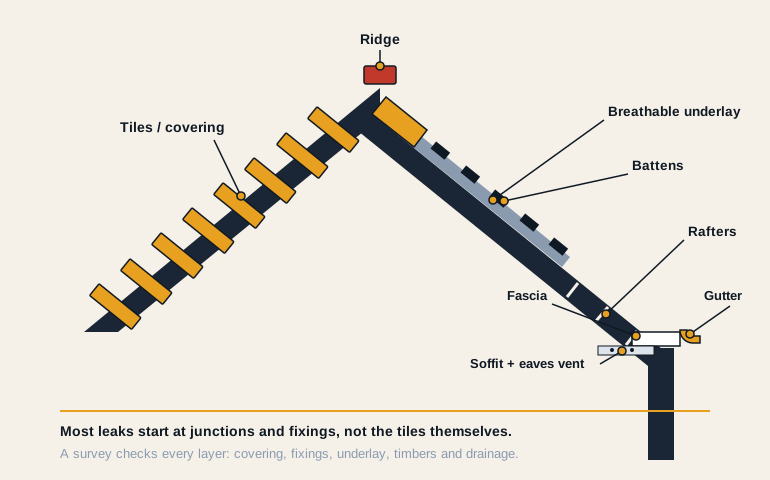
Where roof leaks start — junctions and fixings, not usually the tiles.The process
How a Oxford Emergency Roofing Job Runs
1. Call & triage
Call us and describe the problem; we prioritise active leaks and safety risks and give an honest arrival window.
2. Rapid make-safe
We aim to reach Oxford emergencies within 2–4 hours and apply temporary weatherproofing to stop the water.
3. Assess & document
We assess the damage and, where it is storm-related, photograph and document it for your insurer.
4. Written quote for repair
You get a written quote for the permanent repair once the roof is secure.
5. Permanent repair
We return to carry out the full repair with the 10-year guarantee once the immediate risk is dealt with.
Timescales
How Long Does It Take?
Job
Typical duration
Arrival for active leak
2–4 hours
Temporary make-safe on site
1–3 hours
Permanent repair (booked after)
Per assessment
In a widespread storm we prioritise by risk; the most dangerous and actively leaking properties are attended first.
Access
Scaffold, Skips & Street Access
Emergency make-safe is done from ladders or towers to stop the water fast; any scaffold for the permanent repair is arranged separately. Scaffold is specified for: the permanent repair if it needs it — never the emergency make-safe, which is done fast from ladder or tower - always itemised in your written quote, never a hidden extra, and we arrange it.
Central Oxford's medieval street core and the tight Victorian terraces of Jericho and off the Cowley Road mean rear-access scaffold and permit-controlled pavement space are the norm on many jobs. Pavement scaffold and skip permits go through Oxford City Council; allow a few working days on streets like Holywell Street, Ship Street, St Michael's Street, Merton Street where space is tight.
Pricing
Oxford Emergency Roofing: Cost Guide
Job
Typical range
Notes
Emergency call-out & make-safe
£150–£350
Temporary weatherproofing
Temporary tarp / sheet
£120–£300
Holds until permanent fix
Slipped tile emergency refix
£150–£280
Where safe to access
Storm damage assessment
No call-out fee
Documented for insurer
Permanent repair
Per assessment
Quoted after make-safe
What moves the price
Time of call-out and urgency
Extent of damage and access difficulty
Whether scaffold is needed for the permanent repair
Materials required for the lasting fix
Worked example: An out-of-hours make-safe on a storm-stripped ridge in Botley, applying temporary weatherproofing to stop the ingress, typically runs around £240 before the permanent repair is quoted.
Emergency make-safe charged on completion. Permanent repair quoted in writing separately; storm damage documented for your insurance claim.
Covering OX1, OX2, OX3, OX4 and surrounding postcodes.
Guarantee
Your Guarantee, Explained
The permanent repair carries the 10-year workmanship guarantee; the temporary make-safe is a holding measure to stop immediate damage.
Covered: workmanship for 10 years, in writing, transferable if you sell.
On top: manufacturer warranties on materials (terms vary by product).
Not covered: storm or impact damage - that is an insurance matter, and we will document it for your claim.
If a fault appears in covered work, we come back and put it right. No quibbling, no re-charge.
Good to know
Disruption, Mess & Weather
Fast, focused work to stop the water — we will need access and, if safe, to check inside for the leak path. You do not need to stay home for external work - we just need power and access agreed in advance.
We attend emergencies in all weather; make-safe is designed to hold through the storm until conditions allow a permanent fix. The Thames and Cherwell valley setting keeps ambient humidity high, so drying times for mortar, GRP and biocide run longer here than on the surrounding higher ground.
Storm Damage? Call Oxford's Rapid Response Team
Free survey, written quote, no call-out fee. Covering Oxford and all of Oxfordshire.